How to Do a Payslip for a Domestic Worker in Spain
A step-by-step guide to preparing a domestic worker's payslip in Spain: earnings, deductions and a downloadable template.

By Isabella Velletri, Founder of Maids & Co
Published on Updated on 5 min read
In short
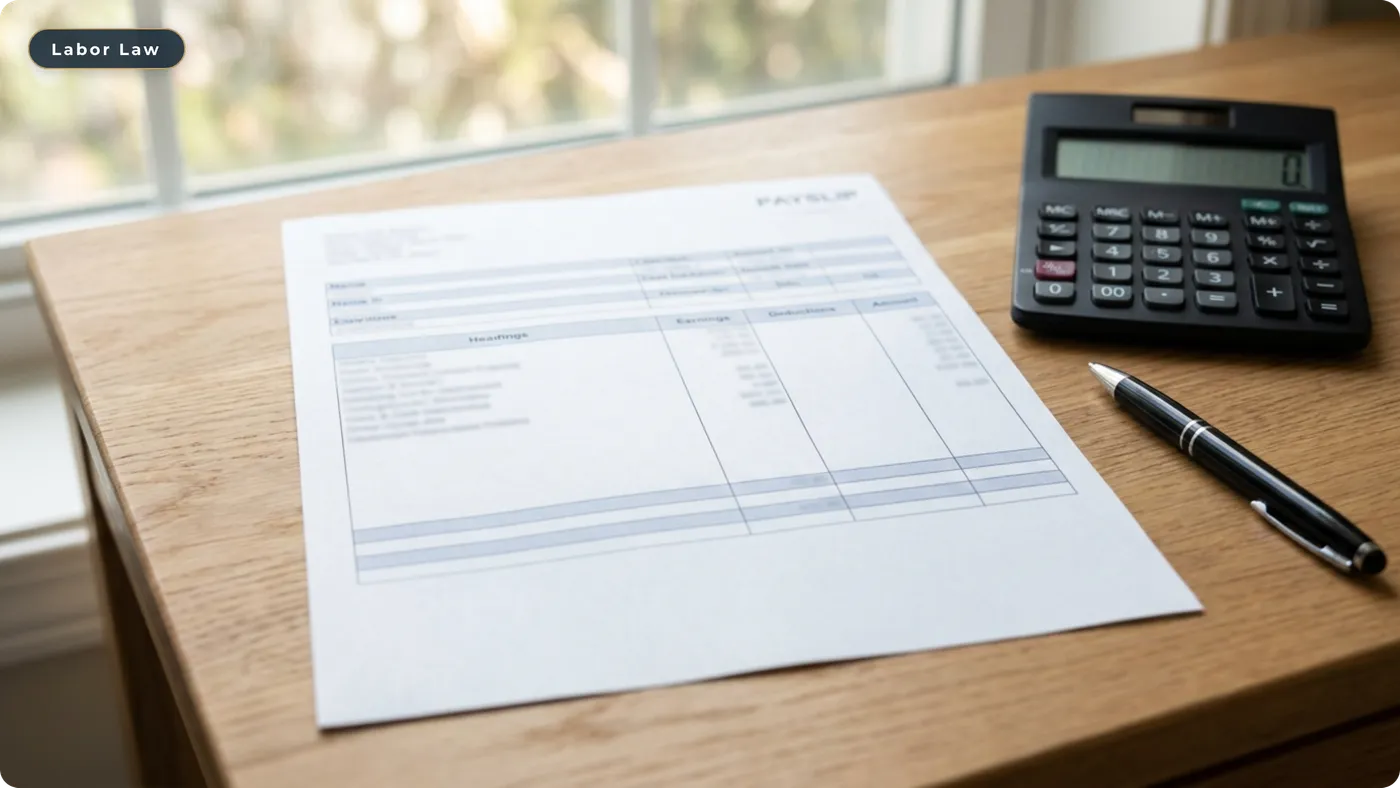
In Spain, drawing up a payslip for domestic workers is a legal requirement for every employer. This document sets out clearly and in detail the salary payments, the deductions applied and the net amount the worker will receive. The payslip is essential for ensuring transparency in the employment relationship and provides documented proof of the payments made and the deductions applied. It is also vital for meeting your obligations to the Social Security (Seguridad Social) and avoiding potential penalties from the Labour Inspectorate (Inspección de Trabajo).
For further detail on the rules in force, you can consult the official website of the General Treasury of Social Security (Tesorería General de la Seguridad Social, TGSS).
Download the Payslip Template for Domestic Workers
To make the process easier, we provide a downloadable payslip template in Excel, updated to the contribution bands currently in force, which you can use as a reference when drawing up the payslips for your domestic staff. To use it, simply fill in the blue boxes.
Step-by-Step Guide to Filling In a Domestic Worker's Payslip
Below, we explain each of the items that must be included on the payslip and how to complete each section correctly.
1. Employer and Worker Details
The top section of the payslip must include the basic details of both the employer and the worker. This ensures both parties are clearly identified:
- Employer: Full name and tax ID number (CIF/DNI/NIE).
- Worker: Full name, tax ID number (NIF/DNI/NIE) and Social Security number.
- Address and Town: The address where the work is carried out.
- Contribution Account Code (Código Cuenta Cotización, CCC): The number assigned to the employer by the Social Security for paying contributions.
- Category and Length of Service: State the worker's professional category (domestic worker, cleaning, care of dependants, etc.) and the start date of the employment relationship.
For a detailed list of categories and hourly pay rates, you can consult the table of the minimum wage currently in force for domestic workers.
2. Earnings
Earnings represent all the amounts payable to the worker for the work carried out. It is important to note that you should only fill in the fields that correspond to the agreement and contract agreed between the employer and the worker. This ensures the payslip faithfully reflects the terms of the employment contract. Earnings are divided into two main categories:
1. Salary Payments
- Basic Salary: The monthly pay agreed in the contract.
- Salary Supplements: Additional amounts that top up the basic salary, such as supplements for length of service, hazardous work or responsibility.
- Standby Time (tiempo de presencia): Periods during which the worker is available to the employer, even when not actively carrying out tasks.
- Overtime: Hours worked beyond the established standard working day.
- Extra Bonus Payments: Additional payments that may be paid every six months, such as the extra payments in June and December.
- Salary in Kind: The part of the salary paid through goods or services, such as accommodation or board, provided it does not exceed 30% of total salary.
2. Non-Salary Payments
- Indemnities or Expense Reimbursements: Compensation for expenses incurred by the worker on the employer's behalf.
- Social Security Benefits and Indemnities: Compensation paid by the Social Security for illness or workplace accidents.
- Benefits in Kind: The value of goods or services provided by the employer to the worker that do not constitute direct salary.
3. Total Gross Earnings
Total Gross Earnings are obtained by adding together all salary and non-salary payments. This is the gross total before any deductions are applied.
4. Deductions
Deductions are the amounts subtracted from total gross earnings, and generally include:
- Worker's Social Security Contribution: This includes contributions for common contingencies (4.70%), unemployment (1.55%) and the Intergenerational Equity Mechanism (Mecanismo de Equidad Intergeneracional, MEI) (0.15%), giving a total deduction of 6.40% of the contribution base in 2026.
- Advances: If the worker has received a salary advance, this amount is deducted from total gross earnings.
- Value of Products Received in Kind: If part of the salary is paid in kind, its value is deducted here.
- Other Deductions: Any other deduction agreed or required under the rules in force.
The Total Deductions are calculated by adding together all the deductions applied.
With our payslip template, when you fill in the final section of the payslip relating to the contribution base and Social Security contributions, the deductions are calculated automatically. This streamlines the process, saving you time and ensuring compliance with the legal rules.
5. Net Pay
Net Pay is the net amount the worker will receive after subtracting Total Deductions from Total Gross Earnings. This is the amount ultimately paid into the worker's account.
6. Determining the Social Security Contribution Base
In this section, the contribution base for the Social Security is set out, including all monthly pay, with extra payments included. It is important to include here:
- Common Contingencies: The part of the contribution covering common risks such as ordinary illness or non-work-related accidents.
- Occupational Contingencies and Unemployment: Specific contributions covering occupational risks and unemployment situations.
- Wage Guarantee Fund (Fondo de Garantía Salarial, Fogasa): A contribution covering compensation in the event of the employer's insolvency.
Drawing up a domestic worker's payslip correctly is essential for complying with the legal rules and maintaining a fair, transparent employment relationship. By following these steps, you can ensure the payslip is complete and legally valid. It is also crucial to stay up to date with changes in employment law to avoid potential breaches.
If you need help preparing payslips or hiring domestic staff, at Maids & Co we offer tailored solutions and expert advice. We take care of the entire process so you can meet your legal obligations easily and with complete peace of mind. Get in touch for more information!
ALREADY HAVE AN EMPLOYEE?
Our labour team handles registration, the contract and payslips
Deregistration and the final settlement too, with labour legal advice: you don't have to deal with the paperwork.
Frequently asked questions
- Is a payslip mandatory for a domestic worker?
- Yes. Providing a payslip is a legal requirement for every employer; it serves as documentary proof of payment and of the deductions made, and it is required for the Social Security (Seguridad Social) and the Labour Inspectorate (Inspección de Trabajo).
- What must a domestic worker's payslip include?
- The employer and worker details, the earnings (basic salary, supplements, extra payments, etc.), the deductions (the Social Security contribution), the net pay and the contribution base.
- What is the minimum basic salary on the payslip in 2026?
- It cannot be lower than the Spanish minimum wage (SMI): 1,221 €/month across 14 payments (or 1,424.50 €/month across 12 payments) for full-time work in 2026.
- How much can be paid in kind?
- Salary in kind (accommodation, board) cannot exceed 30% of total salary.