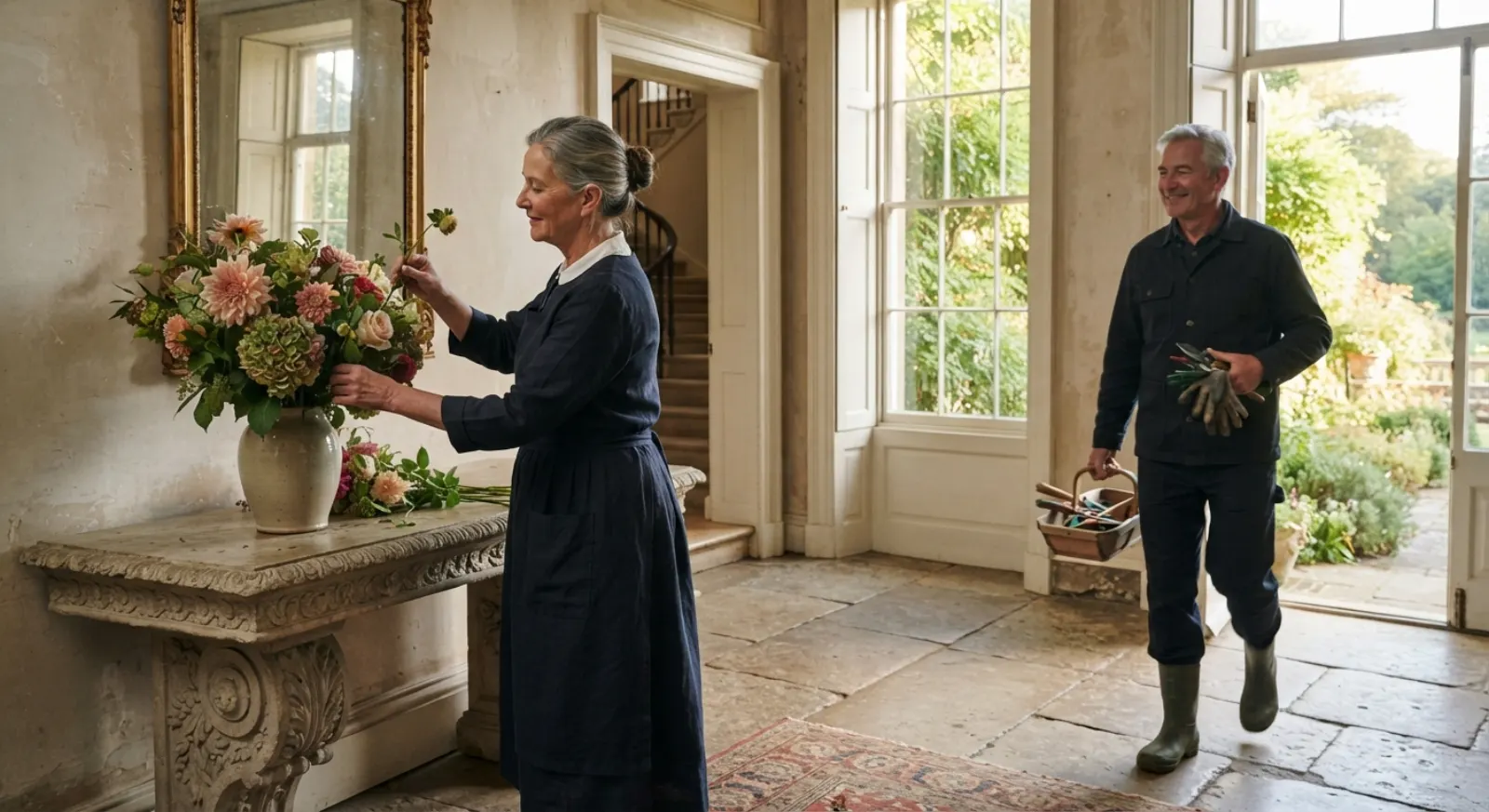
Live-out or hourly carer
- Comes and goes each day
- By the hour or full time (40h)
- When the person can be alone at night
- No room required
From €9.55/h
or from €1,424.50/mo full time, plus Social Security
We select carers by the hour, live-out, live-in or for the night, matched to your relative's level of dependency, with proven experience and verified references.

Spain's Dependency Act (Law 39/2006) sets three levels according to how much help a person needs with basic daily activities (art. 26). The level is assessed by the regional government using an official scale; you do not need one to hire a carer.

Needs help with several basic activities at least once a day. A carer for a few hours at the key moments is often enough: washing, meals, a walk or medication.
Needs help two or three times a day, without a carer's constant support. A full-time live-out carer is a good fit or, if the person lives alone, a live-in carer.
Needs help several times a day and the continuous support of another person. The usual answer is a live-in carer, with someone to cover her rest and, if the nights need watching, a night carer.
The assessment is requested from the regional government, and its decision sets the services or benefits that apply (art. 28). Meanwhile, we start from what your relative needs each day.
All of them are the same employment relationship, domestic service, with a contract and Social Security registration from day one. What changes are the hours they cover and the rest periods that apply.
| Type | How it works |
|---|---|
| By the hour | A few hours a day or a few days a week, at the times that matter most: getting up, washing, meals or a doctor's appointment. Paid for each hour worked, at least €9.55 in 2026, a rate that already includes every pay item. |
| Live-out, full time | Up to 40 hours of effective work a week, Monday to Friday or as agreed, going home at the end of each day. It suits a person who needs company and help during the day but sleeps soundly. |
| Live-in | Lives in the home, with a room and meals. The same 40-hour cap on effective work applies, plus any agreed on-call hours, with daily and weekly rest: which is why a “24-hour” live-in carer does not work 24 hours. Live-in carer |
| Awake night | The carer stays awake all night, attending to the person. Those hours are effective work and count towards the 40-hour weekly cap: seven 8-hour nights add up to 56, so at least two carers are needed. |
| Sleeping night | The carer sleeps in the home and gets up if the person needs her. The contract sets out the overnight arrangement and any agreed on-call hours, and the time she spends getting up to help counts as work. |
A carer for the elderly looks after the person in their own home: helps them wash, dress and move about, prepares their meals, helps them take the medication the doctor has prescribed and keeps them company, at their usual pace and with their usual routines. The role is not a medical one: the carer follows the doctor's and the nurse's instructions and tells the family about any change.
Live-out, full time (40h)
from €1,424.50/mo
2026 SMI over 12 payments · €1,741.74/mo with Social Security
| By the hour (live-out) | from €9.55/h |
|---|---|
| Live-in: market salary (12 payments) | €1,500–2,500/mo |
| Live-in: total cost with Social Security | €1,835–3,060/mo |
| Nights and weekends | depends on the hours |
Indicative 2026 figures. The floor is the minimum wage (SMI): €1,424.50 a month over 12 payments for full-time work, or €9.55 for each hour worked, everything included. The live-in range is the market range we publish on our prices page; for a carer, pay varies with the level of dependency, training and night work. On top of everything comes the family's Social Security contribution (22.27%). Our fee is separate: one month of the agreed salary plus VAT, and only if you hire.
What we guarantee
It depends on how many hours need covering and whether the person can be left alone at night.
From €9.55/h
or from €1,424.50/mo full time, plus Social Security
From €1,500
/mo over 12 payments + 22.27% Social Security
“We are very happy with our experience with Maids & Co. We had quite a demanding search, as we have three children under five and were preparing for a big international move from New York to Spain. Although we were unlucky with a few candidates who changed…”
“Isabella and her team were fantastic in helping us find a nanny. From an initial call to align on profiles to the process and platform they use, together with the candidates presented, it was a smooth an easy process. They were very communicative and helped…”
“Great and easy experience hiring our new house keeper with Maids & Co. They are very helpful and were continuously searching for the perfect candidate. We are very happy and will keep working with them in the future.”
“My experience having Maids&Co supporting me finding and choosing an assistent was the best! Very organized, plenty of good options, speedy and trustworthy. I recommend it.”
A carer hired by a family works under Spain's special employment relationship for domestic service, which covers looking after members of the household (Royal Decree 1620/2011, art. 1.4). She must be registered in the Special System for Domestic Employees from day one. If the job will last more than four weeks, the family must give her the essential terms in writing before she starts (Royal Decree 723/2026, in force from 5 October 2026): the simplest way is a signed written contract, which either party can insist on.
The maximum is 40 hours of effective work a week. On-call hours can be agreed on top, when she is available without working: no more than 20 a week on average over a month, paid at least at the ordinary rate unless compensated with paid time off. There must be 12 hours between working days (10 for live-in staff, making up the rest) and 36 consecutive hours of weekly rest.
The minimum salary is the 2026 SMI: €1,424.50 a month over 12 payments (€1,221 over 14) for full-time work, or €9.55 per hour worked for live-out staff paid by the hour. If she lives in, board and lodging may be deducted up to 30% of her salary, and she must always receive at least the SMI in cash.
We select carers for the elderly — live-in, live-out, by the hour or for the night — in Madrid, Barcelona, Marbella and across Spain, plus Europe with EU-passport staff. In the United Kingdom, since Brexit, we only present candidates who already have the right to work there. We look for profiles with real experience in dependency, reduced mobility and companionship.
Before we present a carer, we check her experience with dementia, transfers and prescribed medication, and we speak to the families she has worked for. You receive the first profiles suited to the level of dependency in under 3 hours.
See every area where we workLaw 39/2006 sets three grades (art. 26): Grade I, moderate dependency, when the person needs help with several basic daily activities at least once a day; Grade II, severe dependency, when they need it two or three times a day, without a carer's constant support; and Grade III, major dependency, when they need it several times a day and, having lost all physical, mental, intellectual or sensory autonomy, require the essential and continuous support of another person. They are assessed by the regional government where the person lives, using the official scale, at the request of the person or their representative (arts. 27 and 28).
It depends on the hours: by the hour, from €9.55 per hour worked in 2026; full time (40h), from €1,424.50 a month over 12 payments, or €1,741.74 with Social Security; and live-in, between €1,500 and €2,500 gross a month over 12 payments, or between about €1,835 and €3,060 a month with the family's contributions. The level of dependency, experience and nights push the figure up. Our fee — one month of the agreed salary plus VAT — is only paid if you hire.
No. Even when she lives in, a carer's maximum is 40 hours of effective work a week, plus any agreed on-call hours, with 2 hours a day for meals, 12 hours' rest between working days (10 if made up later) and 36 consecutive hours off each week. To cover every day you need someone to relieve her and, if your relative needs someone awake at night, a night carer.
On an awake night, the carer stays up and alert all night: those are hours of effective work and count towards the 40-hour weekly cap. On a sleeping night she sleeps in the home and only gets up if needed: the contract must set out the overnight arrangement and, if it is agreed that she remains available, those on-call hours, which may not exceed 20 a week on average and are paid at least at the ordinary rate unless compensated with time off (Royal Decree 1620/2011, arts. 5 and 9).
Through an in-depth interview built on real cases: how she has cared for people with dementia or Alzheimer's, how she transfers someone from bed to chair and how she organises prescribed medication. We check her care qualifications where the role requires them and verify her references with previous families. We only present people who suit the level of dependency and your home, and you can arrange a 2-day trial at home before deciding.
Yes: when the case calls for it, we look for carers with real experience of dementia, Alzheimer's and Parkinson's, who can keep routines steady, help prevent falls and handle moments of confusion calmly. We ask about specific cases at interview and cross-check with their references.
It depends on the benefit your regional government grants. The service-linked benefit must go towards a service from an accredited provider or centre (Law 39/2006, arts. 14.3 and 17), while the personal assistance benefit helps pay for a personal assistant for a set number of hours, under access conditions agreed by the Territorial Council and applied by your region (art. 19). We can advise on how it fits with hiring a carer.
Registration, yes: from day one and whatever the hours, in the Special System for Domestic Employees. The contract too, in practice: for any job of more than four weeks, the essential terms must be given to her in writing before she starts (Royal Decree 723/2026, in force from 5 October 2026), and either party can insist on a written contract (Royal Decree 1620/2011, art. 5). If the family prefers, our in-house employment advisers handle the registration and the payslips.
If the carer leaves or does not suit your relative or the family, we offer a free replacement within the first 6 months in Madrid, Barcelona and Marbella. And wherever you are, if you are not satisfied during the first month, we refund 50% of the fee.
We present the first suitable carers for the case, with experience and checked references, in under 3 hours; very specific profiles can take up to 48 hours.

How a foreign family registers a housekeeper, nanny or carer with Spanish Social Security: Import@ss, the employer code, the 2026 contributions and what changes if you live abroad.
Read more
What a Spanish employment contract for a housekeeper, nanny or carer must say: the types you can sign, overnight stays for a live-in and the probation period, with the official templates.
Read more
What a family in Spain owes when a housekeeper, nanny or carer's contract ends in 2026: 12 days per year for a justified cause, 33 for an unfair dismissal, one month if the employer dies, plus the final settlement. Figures with the 2026 minimum wage and the BOE sources.
Read moreVerified candidates in under 3 hours. You only pay if you hire.