Regularising Your Domestic Worker in Spain: Arraigo Social
How to help your domestic worker regularise her status through arraigo social in 2026: the requirements after Royal Decree 1155/2024, the employer's role and the timelines.

By Isabella Velletri, Founder of Maids & Co
Published on Updated on 6 min read
In short
What is arraigo social?
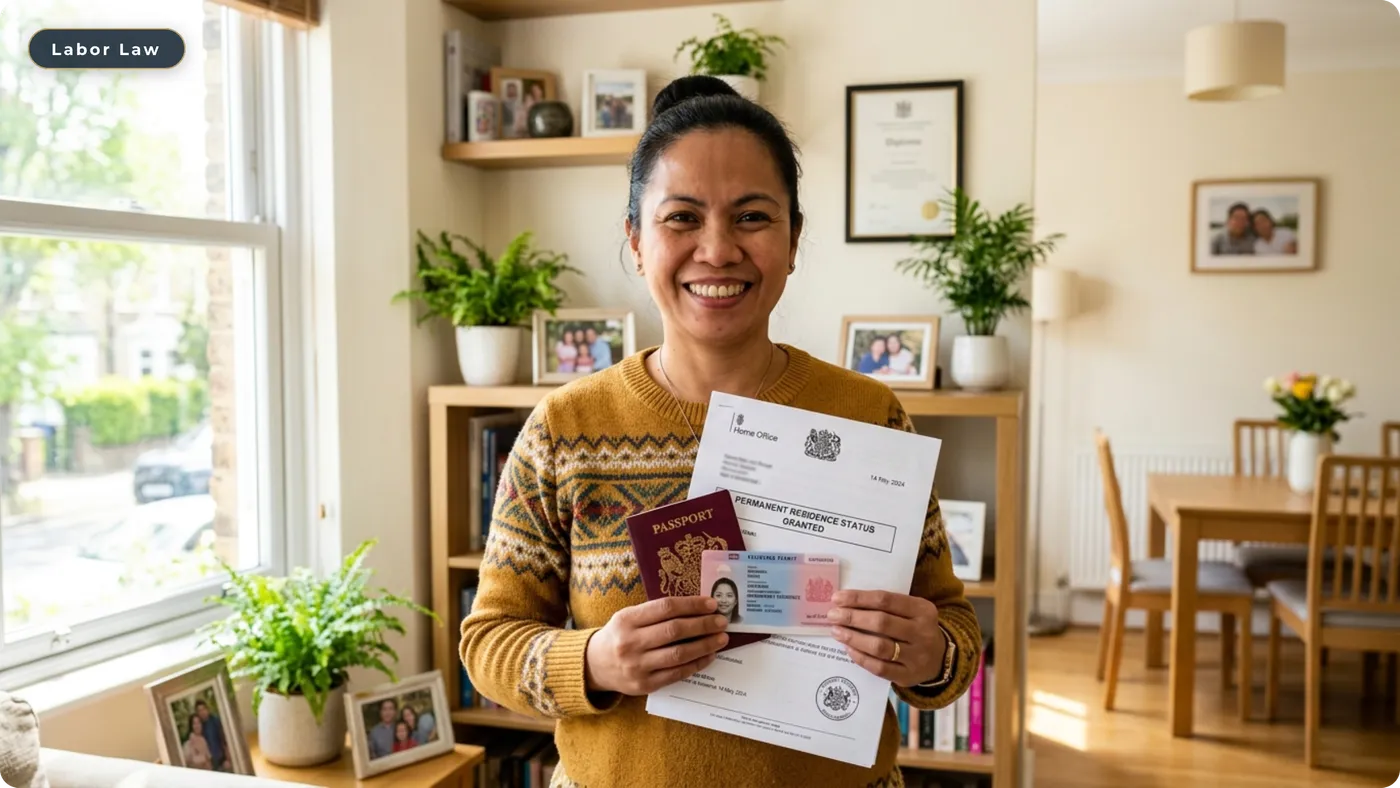
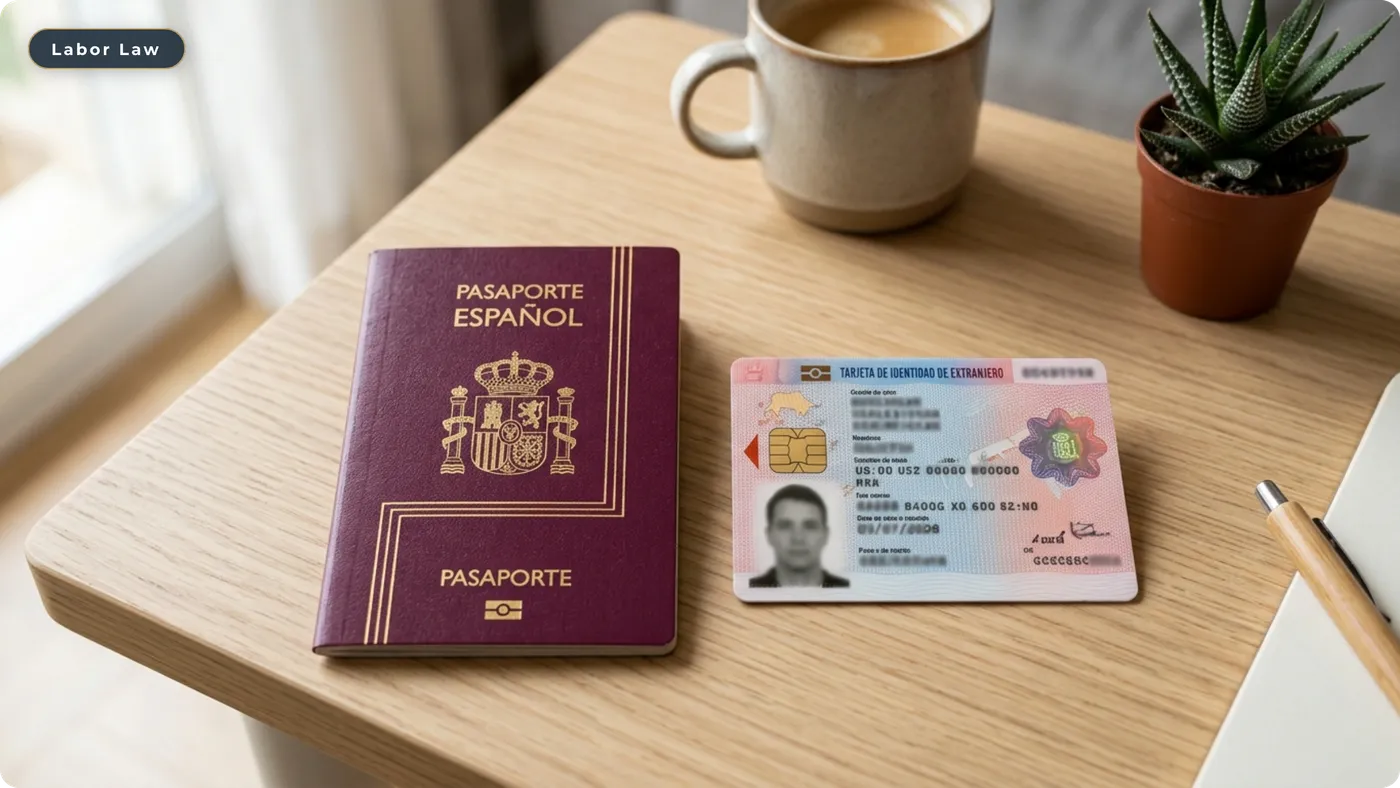
Arraigo social is a temporary residence permit granted on exceptional grounds, designed for non-EU nationals who have already been living in Spain irregularly for some time. It grants residence and authorisation to work (whether self-employed or for an employer) for one year, renewable. It is the route most families use to help regularise their domestic worker, hence the colloquial phrase 'doing the papers' (hacer los papeles).
One point to clarify from the outset: you cannot 'do the papers' on your own. It is the worker who submits the application; the employer (the family, not the agency) provides the job offer and proves their financial standing. Maids & Co handles the legal hiring, but the employer remains the family.
What changed with Spain's new Immigration Regulations (2026)
Royal Decree 1155/2024 repealed the old Regulations (Royal Decree 557/2011) and completely reorganised the various arraigo categories. Royal Decree 316/2026 (published in the Official State Gazette (BOE) on 15 April 2026) then opened an extraordinary regularisation. These are the changes that most affect anyone wanting to regularise their domestic worker:
- The required continuous residence drops from 3 years to 2.
- Absences from Spain may not exceed 90 days over that period (the previous threshold was around 120).
- Arraigo social no longer requires an employment contract: it is based on family ties or an integration report, plus sufficient financial means.
- For the contract-based route there is now a dedicated category, arraigo sociolaboral, granted with a contract of at least 20 hours per week that guarantees the SMI.
- Royal Decree 316/2026 enabled an extraordinary regularisation in 2026, with provisional authorisation to work from the moment the application is admitted for processing.
Requirements for the domestic worker (the applicant)
- Not being a citizen of the EU, the EEA or Switzerland, nor a family member of one covered by the EU free-movement regime.
- Having no criminal record in Spain or in the countries where she has lived, for offences recognised under Spanish law.
- Not being banned from entering Spain, nor subject to a non-return commitment.
- Having stayed continuously in Spain for at least 2 years, with absences not exceeding 90 days in total.
- Proving family ties with resident foreign nationals or with Spanish citizens, or providing a social integration report issued by the regional government (Comunidad Autónoma).
- Proving sufficient financial means, whether her own or through the employer's job offer.
Employer requirements and financial means
Although arraigo social no longer requires you to submit a contract, a firm job offer is still one of the best ways to demonstrate means of support and integration. To provide one, you as the employer must be up to date with the Tax Agency (Hacienda) and Social Security (Seguridad Social), and prove enough financial standing to pay the agreed salary and support your own family.
| Employer's household composition | Minimum means required |
|---|---|
| Employer living alone | 100% of IPREM = 600 €/month |
| Two-person household | 150% of IPREM = 900 €/month |
| For each additional member | +50% of IPREM = +300 €/month |
The minimum salary you must offer in 2026
The contract must guarantee, as a minimum, the Spanish minimum wage (SMI) set by Royal Decree 126/2026 (a 3.1% rise, backdated to 1 January 2026):
| Pay arrangement | 2026 minimum amount |
|---|---|
| Monthly over 14 payments | 1,221.00 € |
| Monthly over 12 payments (extra payments pro-rated) | 1,424.50 € |
| Annual | 17,094 € |
| Hourly (live-out or hourly work) | 9.55 € |
Once the application is approved, you will need to formalise the contract and register your worker with Social Security's Special System for Domestic Workers (Sistema Especial de Empleados de Hogar) from her very first hour of work. We explain how in our guide to registering with Social Security.
Documents and pre-contract
The employer usually provides: a copy of their ID document (DNI or NIE), a job offer or pre-contract signed by both parties, recent payslips or a bank certificate proving their financial standing, their latest income tax return, and certificates confirming they are up to date with the Tax Agency (Agencia Tributaria) and Social Security.
If you opt for the contract-based route (arraigo sociolaboral), the pre-contract must meet several requirements: a working week of at least 20 hours, a minimum duration of 3 months, a salary at or above the SMI, and a suspensive clause making the start of the employment relationship conditional on the permit being granted. You can read what the pre-contract must contain in our dedicated guide.
Timelines, cost and administrative silence
The legal deadline for resolving an arraigo application is 3 months from the date the complete application is submitted. If the authorities do not respond within that period, negative administrative silence applies (the application is deemed refused), although in practice it is advisable to wait for an express decision. Actual processing times vary by immigration office (oficina de extranjería) and can run longer.
As for cost, the immigration fees (form 790, code 052) and the subsequent foreigner's identity card (TIE) are modest; the main expense is usually professional advice if you decide to delegate the procedure.
Arraigo social vs arraigo sociolaboral
| Aspect | Arraigo social | Arraigo sociolaboral |
|---|---|---|
| Basis of the application | Family ties or an integration report | One or more employment contracts |
| Time in Spain | 2 continuous years | 2 continuous years |
| Contract required? | No (an offer helps prove means) | Yes, ≥ 20 hrs/week overall and salary ≥ SMI |
| Prior complaint | Not required | Not required |
| Permit granted | Residence and work, 1 year renewable | Residence and work, 1 year renewable |
If your worker has been in Spain for more than 2 years and you have a contract to offer her, the arraigo sociolaboral route is often the more direct option.
Extraordinary regularisation 2026 (Royal Decree 316/2026)
Alongside the ordinary arraigo routes, Royal Decree 316/2026 opened an extraordinary regularisation with a limited application window: from 16 April to 30 June 2026. It is open to people who were in Spain before 1 January 2026 and can prove a continuous stay of at least 5 months at the time of application. One of its major advantages is provisional authorisation to work from the moment the application is admitted for processing, valid throughout the country and across any sector, with an initial validity of one year.
In the meantime, keeping a domestic worker without a contract or Social Security registration exposes the family to penalties. Review the risks in our guide to employing a domestic worker without papers.
How does Maids & Co help?
At Maids & Co we support families through the legal hiring of their domestic worker: we coordinate the paperwork, the pre-contract, registration with Social Security and the payroll in line with the current SMI. Remember that the agency is not the employer (the family is), but we make sure the whole process is done correctly. See our prices or get in touch if you have questions about how to regularise your worker.
ALREADY HAVE AN EMPLOYEE?
Our labour team handles registration, the contract and payslips
Deregistration and the final settlement too, with labour legal advice: you don't have to deal with the paperwork.
Frequently asked questions
- How many years do you need to be in Spain to apply for arraigo social?
- Since Royal Decree 1155/2024, you need 2 years of continuous residence in Spain (previously 3), with absences not exceeding 90 days over that period.
- Can I sort out the papers for my domestic worker myself?
- The application is filed by the worker, not the employer, but your role is crucial: a stable job offer at the SMI and proof of your financial standing are decisive in getting the arraigo granted.
- How many hours must the contract have for arraigo?
- Arraigo social requires no contract; if you take the contract-based route (arraigo sociolaboral), at least 20 hours per week overall, guaranteeing the SMI, is enough.
- How much money must the employer prove?
- As a private individual you must prove 100% of the IPREM (600 €/month) if you live alone, 150% (900 €) for a two-person household, and an extra 50% (300 €) for each additional member, always over and above the contract salary.
- How long does arraigo social take?
- The legal deadline for a decision is 3 months, with negative administrative silence; in practice, the wait can be longer depending on the immigration office.
- What is the difference between arraigo social and arraigo sociolaboral?
- Arraigo social is based on family ties or an integration report and requires no contract; arraigo sociolaboral is based on a contract of at least 20 hours per week guaranteeing the SMI.