Hiring a Foreign Domestic Worker in Spain: 2026 Guide
A complete 2026 guide to hiring a foreign domestic worker in Spain: EU versus non-EU nationals, the arraigo sociolaboral route (Royal Decree 1155/2024), the extraordinary 2026 regularisation, the pre-contract, Social Security registration, the real cost and the risks of doing it off the books.

By Isabella Velletri, Founder of Maids & Co
Published on Updated on 8 min read
In short

Hiring a foreign domestic worker is one of the most common — and most daunting — decisions families face in Spain. The good news is that it is perfectly legal and very common. The key lies in distinguishing two situations that completely change the paperwork: whether the worker is an EU national or a non-EU national. From there, everything else (the contract, the registration and the cost) follows the same rules as for any domestic worker in Spain.
EU or non-EU national: the question that changes everything
Before talking about contracts or Social Security, there is a single question to answer: where is the person you want to hire from? The answer determines whether you can hire her directly tomorrow or whether you first have to regularise her administrative status.
If she is an EU, EEA or Swiss national
EU nationals do not need work authorisation. To hire them, it is enough that they hold their NIE (foreigner identity number) and that you register them with the Social Security from the very first hour. From that moment they have exactly the same rights and obligations as a Spanish worker: pay at the SMI, extra payments, holiday, contributions and unemployment protection. In practice, it is a direct hire with no immigration formalities.
If she is a non-EU national
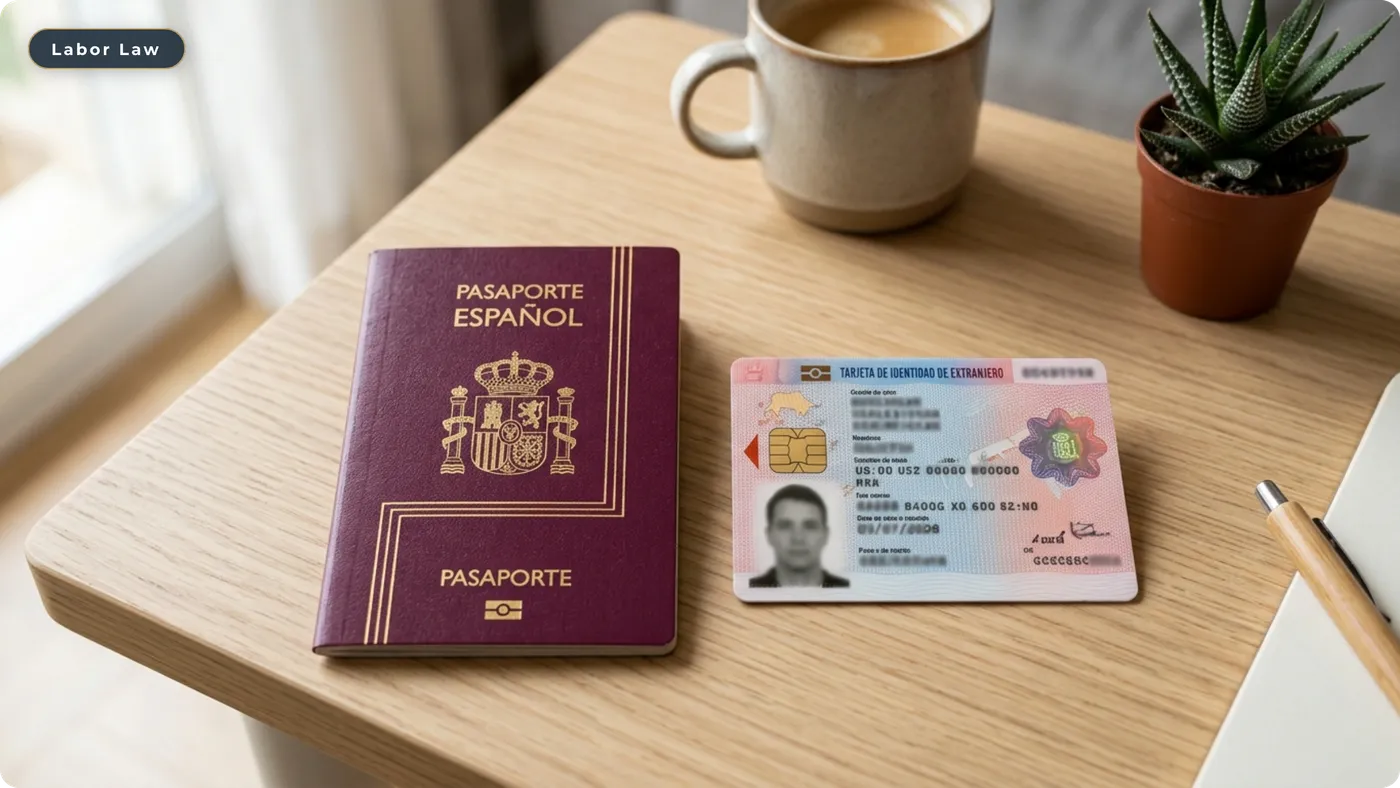
Here a residence and work permit is required. If the worker already holds a valid TIE (foreigner identity card) that allows her to work, hiring is direct: contract and registration. If she does not yet have papers, you cannot employ her in the meantime; her status must be regularised first. The two main routes in 2026 are the arraigo sociolaboral (if she has already been in Spain for some time) and the extraordinary regularisation open this year. It is worth dispelling a widespread myth from the outset: there is no 183-day threshold for regularising someone through arraigo. The period that counts is two years of continuous residence.
| Worker's status | Route | What she needs |
|---|---|---|
| EU, EEA or Swiss national | Direct hire | NIE + Social Security registration from the 1st hour |
| Non-EU national with a valid work permit | Direct hire | Valid TIE + Social Security registration |
| Non-EU national, 2+ years in Spain, undocumented | Arraigo sociolaboral (Royal Decree 1155/2024) | Pre-contract of 20+ hrs/week at the SMI + proof of 2 years' residence |
| Non-EU national who arrived before 1 January 2026 | Extraordinary regularisation (Royal Decree 316/2026) | Application before 30 June 2026 |
The arraigo sociolaboral step by step (Royal Decree 1155/2024)
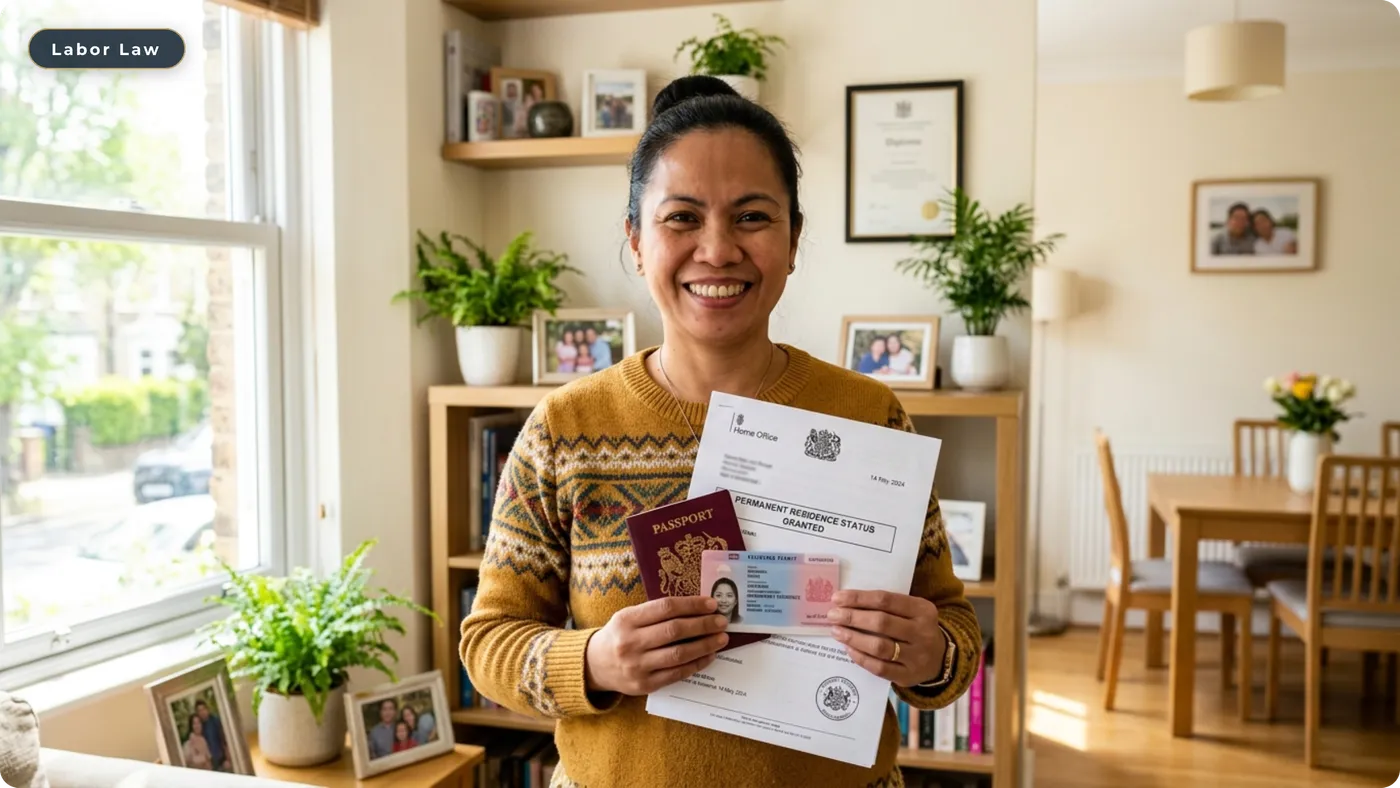
The Spanish Immigration Regulations (Reglamento de Extranjería) approved by Royal Decree 1155/2024 came into force on 20 May 2025 and reorganised the various arraigo (roots) routes. The arraigo sociolaboral is today the standard way to regularise a domestic worker who already lives in Spain and whom a family wishes to hire. Its essential requirements are three: proving two years of continuous residence in Spain, having no relevant criminal record, and holding a job offer of at least 20 hours per week at the SMI. Unlike the former arraigo laboral, no prior complaint or proof of an earlier irregular employment relationship is needed.
- Check that the worker can prove two years of continuous residence in Spain (town-hall registration, certificates and other evidence of stay).
- The family draws up and signs a pre-contract of employment for at least 20 hours per week, with pay equal to or above the SMI.
- The application for a residence permit through the arraigo sociolaboral route is submitted to the Immigration Office (Oficina de Extranjería).
- Once the permit is granted, the worker obtains her TIE and the family completes the Social Security registration.
- The final contract is signed and the employment relationship begins fully in order.
The extraordinary 2026 regularisation (Royal Decree 316/2026)
In addition to ordinary arraigo, an extraordinary regularisation process approved by Royal Decree 316/2026 (which amends the Spanish Immigration Regulations) is open in 2026. It is an exceptional, temporary window, separate from the arraigo sociolaboral, designed to regularise people who were already in Spain before 1 January 2026. The critical detail is the deadline: applications may be submitted until 30 June 2026, and this cannot be extended. If the person you want to hire might fit this process, it is urgent to consult an immigration law firm as soon as possible, because the deadline is all but exhausted.
The pre-contract: the document that opens the door to arraigo
In both arraigo and regularisation, the document the family provides is the pre-contract (or firm job offer). It is the hiring commitment that the Immigration authorities assess in order to grant the permit. To be valid it must meet four conditions: working hours of at least 20 hours per week, a minimum duration of three months, pay equal to or above the SMI in proportion to those hours, and a suspensive clause making clear that the contract will only take effect once the work authorisation is granted. Drafting it well is decisive: a poorly drawn pre-contract is one of the most common grounds for refusal. We have a dedicated guide to the pre-contract with a sample template.
Social Security registration
Once the worker has her permit (or from day one, if she is an EU national), the family must register her with the Special System for Domestic Workers (Sistema Especial para Empleados de Hogar) from the very first hour of work. Registration and contributions are the employer's responsibility — that is, the family's. In 2026 the contribution includes the Intergenerational Equity Mechanism (MEI), set at 0.90%. It is worth remembering that IRPF (Spanish income tax withholding) is not a compulsory deduction in domestic employment: the family is not required to apply any withholding, unless expressly agreed with the worker. If the employer does not reside in Spain, registration has particularities that we explain in the guide on registration by a non-resident.
The real cost of hiring (with the worker fully in order)
The cost does not change because the worker is a foreigner: what matters is the SMI and the contribution. For 2026, Royal Decree 126/2026 sets the minimum wage for domestic workers at 1,221 €/month over 14 payments (equivalent to 1,424.50 €/month if spread over 12 payments), 17,094 €/year or 9.55 €/hour actually worked. Adding Social Security contributions, the total cost for a family with a full-time worker at the SMI is around 1,801 €/month. That is the realistic figure to keep in mind when planning the budget.
And if the relationship ends
It is wise to budget for the exit too. In domestic employment, termination for a justified cause (what replaced the old desistimiento in 2022: the family ends the contract in writing for a household reason, not a disciplinary one) triggers severance of 12 days' pay per year worked, capped at six months' salary. A dismissal ruled unfair (improcedente) rises to 33 days per year, capped at 24 months' salary. To that you must add the final settlement (finiquito), which includes, among other items, the extra payments accrued pro rata by half-year. Being clear about these figures avoids surprises and disputes.
The agency's role: who is the employer?
This is a very common confusion and worth settling: in domestic employment the employer is always the family, not the agency. It is the family who signs the contract, registers the worker, pays the wage and answers for the employment obligations. An agency such as Maids & Co selects and proposes candidates, supports you throughout the process and handles the labour and legal side through its administrative office (gestoría), but it does not replace the family as a party to the contract. Knowing this matters because the legal responsibilities — including any penalties — fall on the employer.
Hiring off the books: why it never pays
Employing a foreign national without registration or work authorisation is an infringement of the Spanish Law on Infractions and Sanctions in the Social Order (LISOS). Fines range from 3,750 € to 12,000 € per worker, and that is only the start: the family would also have to pay the unpaid contributions, with their surcharges, and could incur more serious liabilities. On top of all that, the worker is left with no protection, no contributions and no sick pay. Regularising always works out cheaper than taking the risk. If this scenario worries you, read our guide on being reported for hiring off the books.
Detailed guides for each step
This article is a general guide; each procedure has its own detailed guide. You can go deeper into how to sort out your worker's papers (arraigo social), what to do if you are reported for hiring off the books, how to draft the pre-contract, the particularities of arraigo laboral with a part-time contract, and registration by a non-resident. And, for any doubt about your specific case, the most prudent course in an immigration matter is to seek professional advice before signing anything.
Related immigration guides
- How to sort out your worker's papers (arraigo social)
- Being reported for hiring a domestic worker off the books
- The domestic worker pre-contract: what it includes
- Arraigo laboral with a part-time contract
- Can a non-resident register a worker?
LOOKING FOR STAFF?
First profiles in under 3 hours
We select, interview and check references; you simply decide. One-off fee and a 6-month guarantee.
Frequently asked questions
- Can you hire a foreign domestic worker who has no papers?
- She cannot be employed off the books while she has no permit, but her status can be regularised so you can hire her legally. The usual route is the arraigo sociolaboral under Royal Decree 1155/2024 (two years' residence in Spain plus a contract of at least 20 hours per week at the SMI) and, during 2026, the extraordinary regularisation under Royal Decree 316/2026.
- How many years must you have been in Spain for arraigo sociolaboral?
- Two years of continuous residence in Spain. There is no 183-day threshold: that figure is a myth. What you prove is the two years of stay, together with the absence of a criminal record and a job offer of at least 20 hours per week at the SMI.
- Does an EU domestic worker need a work permit?
- No. EU, EEA and Swiss nationals do not need work authorisation. It is enough that they hold their NIE and that the family registers them with the Social Security from the very first hour. From then on they have the same rights as any Spanish worker.
- Until when can you apply for the extraordinary 2026 regularisation?
- Until 30 June 2026, and this deadline cannot be extended. The process is governed by Royal Decree 316/2026 and is aimed at people who were already in Spain before 1 January 2026. Given how tight the deadline is, it is best to consult an immigration law firm as soon as possible.
- Who is the employer, the family or the agency?
- The family. They are the one who signs the contract, registers the worker, pays the wage and assumes the legal responsibilities. The agency selects candidates, supports the process and handles the labour and legal side, but it is not a party to the domestic employment contract.