Live-in domestic couple for a second home

We select live-in couples for country, mountain or coastal second homes, used by the family at weekends, for whole seasons or on holiday.

  • Placement agency no. 1300000318
  • First vetted couples in under 3 hours, references checked
  • One-off fee only when you hire · 6-month guarantee in Madrid, Barcelona and Marbella

Step 1 of 2

Get vetted couple profiles

No cost during the search. You only pay if you hire.

Which couple do you need?

orI prefer WhatsAppBy submitting, you accept our privacy policy.
WHAT IT IS

A live-in couple for a second home

A domestic couple who look after the property during the family's stays and keep it ready for the rest of the year

A live-in couple for a second home is a couple who usually live on the property and organise their work around when the house is in use. Unlike the main residence, a second home is used mainly for rest, leisure and specific stays.

When the family is in residence, the house operates at full capacity, with considerably more intensity than a main residence: cleaning, cooking, laundry, bedrooms, shopping, table service and driving. When the house is empty, the work centres on supervising it, maintaining it and preparing it for the next arrival.

The couple must therefore provide an organised, demanding service during stays and work with autonomy and responsibility when the family is not at the property.

At Maids & Co we assess the couple jointly, check their experience of this kind of residence and their references, and structure the placement as two separate employment relationships. We particularly value the ability to anticipate arrivals, run the house without constant supervision and coordinate the busiest periods.

Request a couple for a second home

Four second homes, four ways of organising the work

The type of property matters, but even more how and when the family uses it. That is why we look at its occupancy calendar, the usual number of people, how often there are guests and the upkeep it needs while it stands empty.

House by the sea

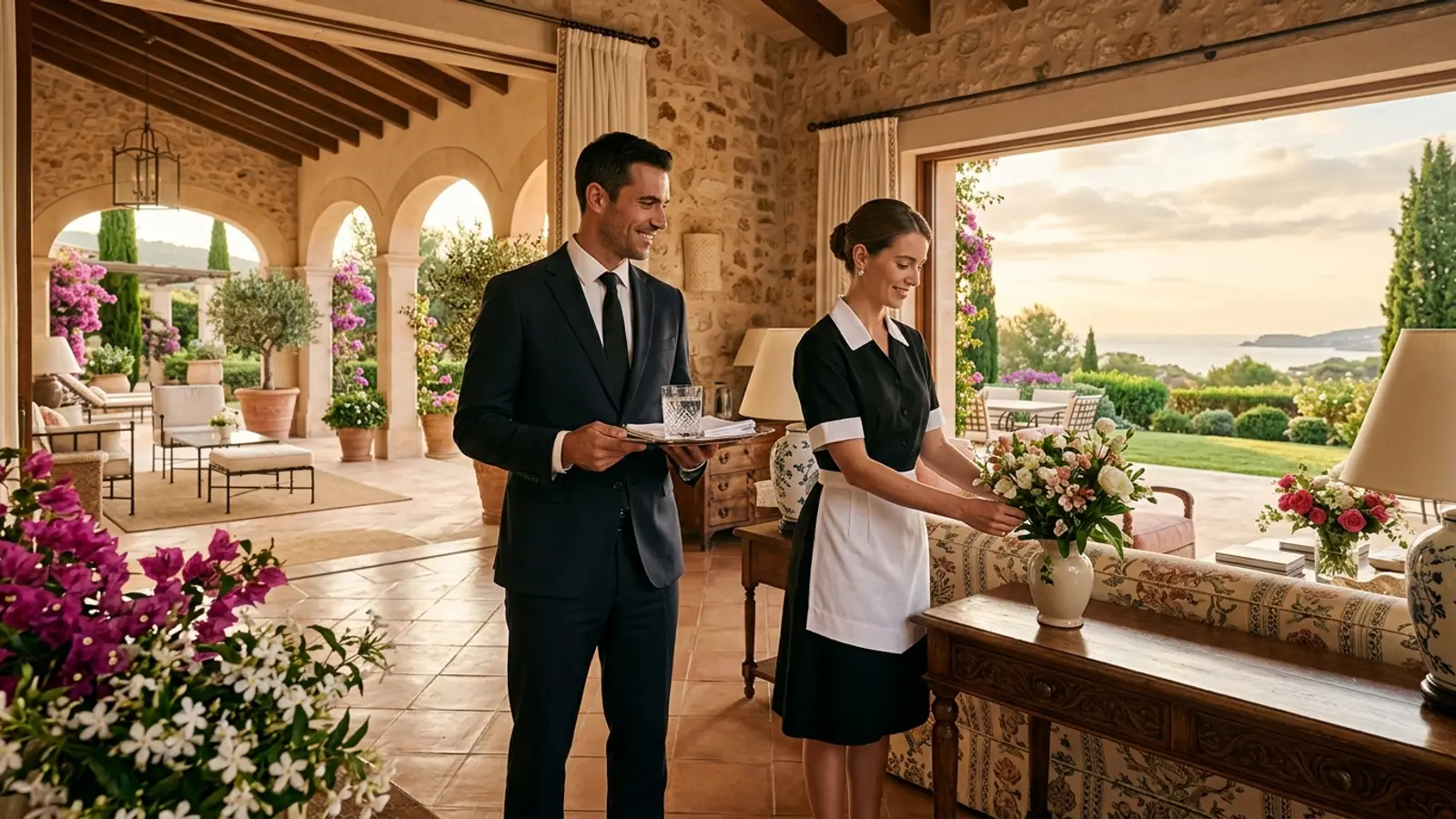
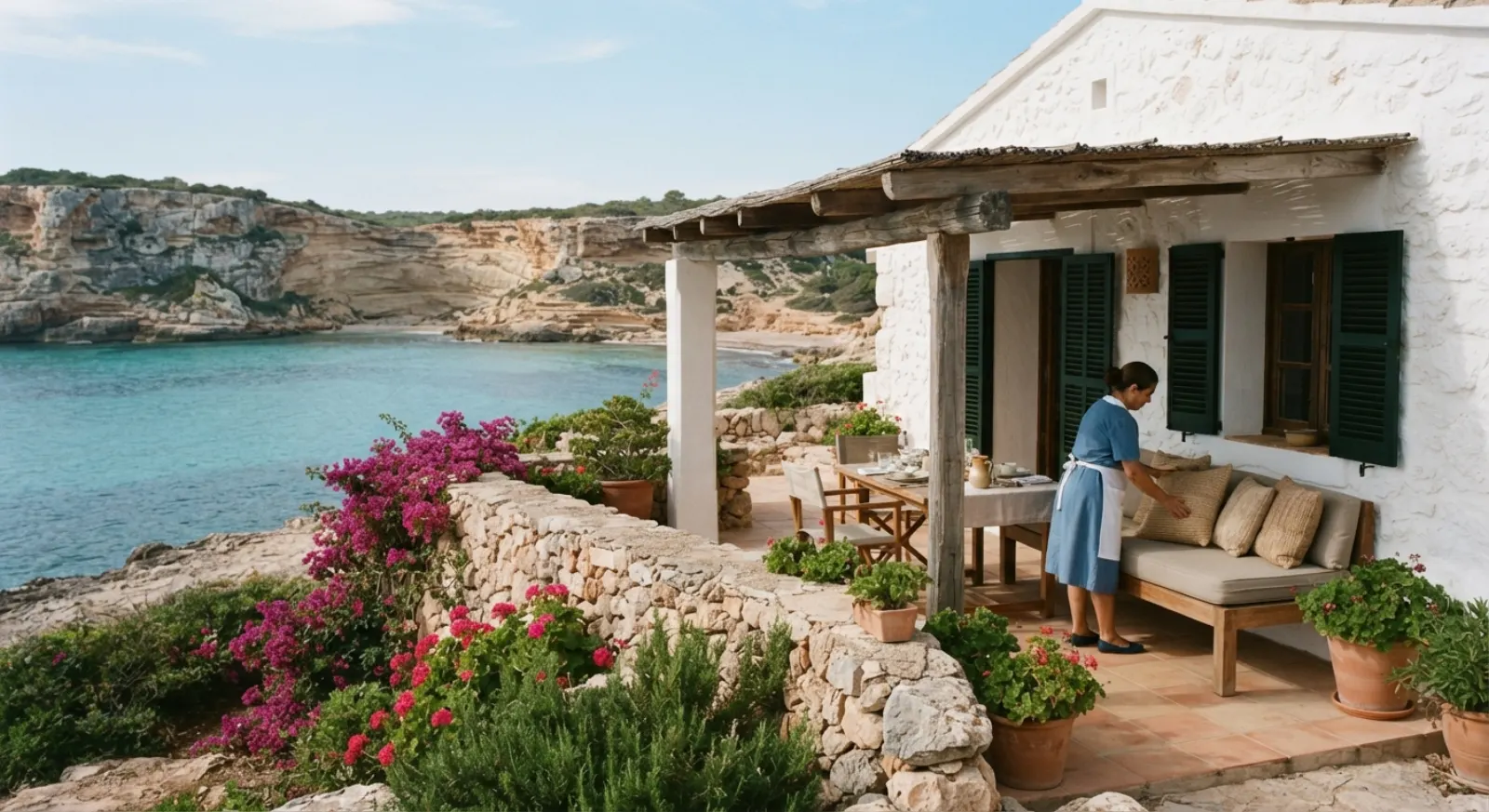
A house by the sea concentrates most of its activity in the summer months or in long spells of good weather, with relatives and guests, meals outdoors and constant use of terraces and pool.

Damp, salt air, outdoor furniture, awnings and glazing need constant attention. Once the season is over, the couple prepare the house for the quieter months.

  • Summer season
  • Terraces and pool
  • Damp and salt air

Weekend country house

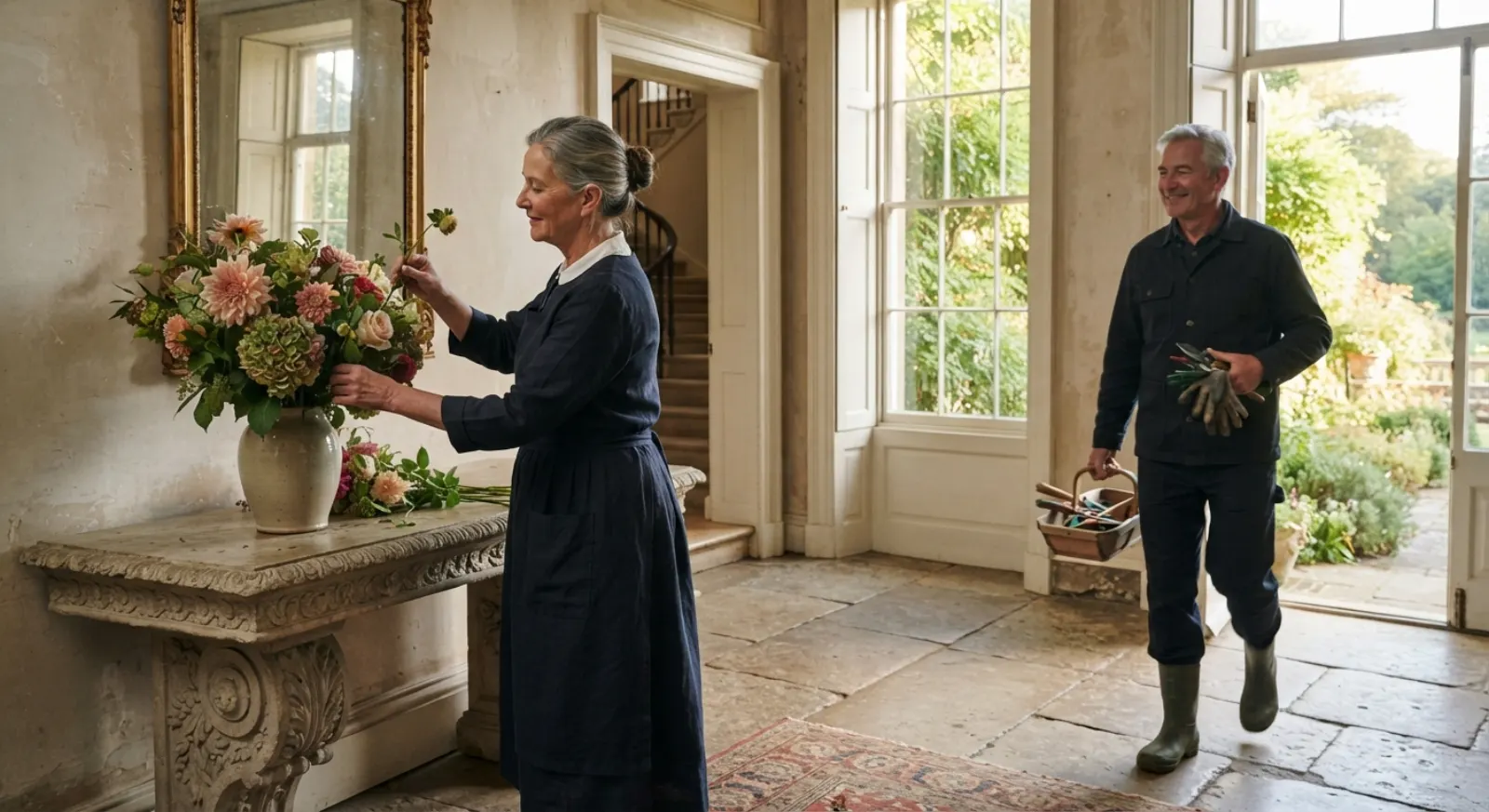
The family uses it often, but for short stays: weekends, bank holidays and holidays. Before each arrival, the house must be clean and at the right temperature, with the larder stocked and the bedrooms ready.

Between stays, the work centres on the garden, kitchen garden or plot, watering, pruning, pets and small repairs.

  • Weekends and bank holidays
  • Garden, kitchen garden and plot
  • Pets

Winter mountain house

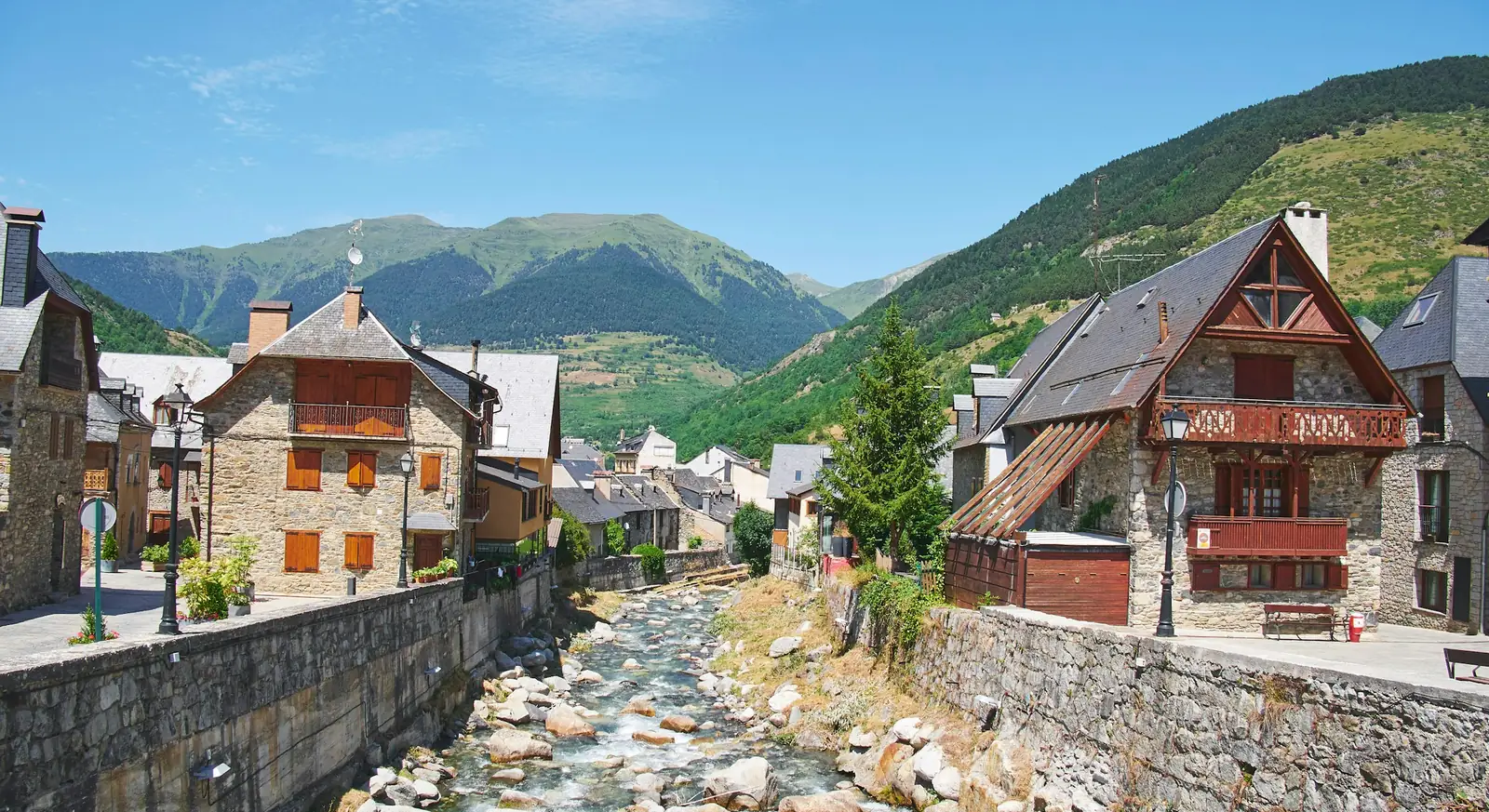
It includes chalets in ski resorts across Europe, where winter concentrates the activity and couples used to this environment are sought. Before each arrival, the heating, boiler, fireplaces and access are checked, and snow may call for outside services.

During the stay there is more work with warm clothing, footwear and drying clothes. Outside winter, the focus is on preventive maintenance, inspections and work that is difficult to do in high season.

  • Heating and boiler
  • Access in snow
  • Ski resorts

Holiday house with guests

Some properties receive relatives and friends at Christmas, Easter, in summer or for celebrations. Bedroom preparation, meals, table service and laundry then increase, and the couple quickly adapt the organisation to the number of people in the house.

When the number of guests requires it, the couple help coordinate temporary extra staff: cooking, cleaning or table service.

  • Christmas, Easter and summer
  • Table service
  • Temporary extra staff
HOW THE COUPLE SPLIT THE WORK

What a live-in couple does at the property

In a second home, the usual split combines indoor and outdoor service, and the couple must adapt to very different working rhythms.

  • Interior and cooking

    Cleaning and preparing the house between stays, bedrooms, bed and bath linen, laundry and ironing, the larder and the family's everyday cooking.

    During absences, the couple deep-clean wardrobes, linen and windows. Where there is a cook or chef, they coordinate with that professional.

  • Garden and pool

    Upkeep of gardens and outdoor areas, watering, lawn, basic pruning, the pool and its filtration, terraces and outdoor furniture.

    In properties that stand unoccupied for periods, these duties make sure the grounds are in good condition when the family returns.

  • Maintenance and repairs

    Supervision of heating, air conditioning, pumps, water systems, shutters and damp, small repairs and preventive maintenance.

    Spotting a problem while the house is empty means it can be fixed before the next arrival, avoiding bigger problems while the house is in use.

  • Opening and closing the property

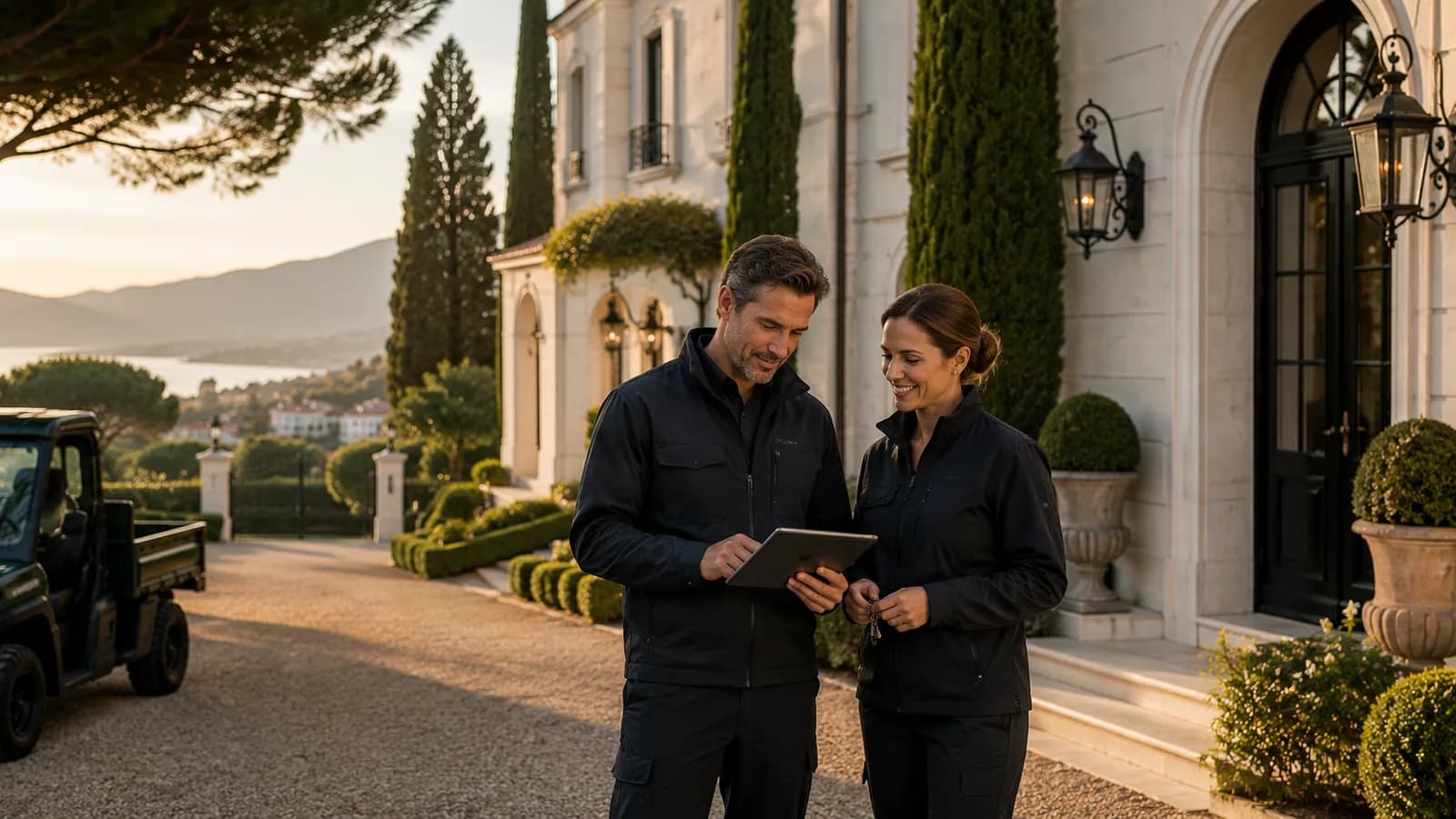
    Before each arrival, the couple get the systems, bedrooms and grounds working, even when the stay is decided at short notice.

    Afterwards, they organise the property for the next period: airing, checking the systems, protecting certain items and following up outstanding issues.

  • Car, shopping and errands

    Shopping before the family arrives, restocking the larder, errands, basic management of vehicles and, where it is part of the role, pick-ups from airports and stations.

    Depending on where the property is, a driving licence can be important for both partners.

  • Presence, security and suppliers

    Receiving and supervising suppliers, technicians and tradespeople, keyholding, alarm systems and regular checks of the property while the family is away.

    This continued presence makes it possible to spot problems and coordinate work in good time.

The usual split: indoor and outdoor service

  • Interior and cooking + garden and pool, maintenance and repairs
  • Interior and cooking + car, shopping and errands
COST IN 2026

What a live-in couple for a second home costs

The pay of a live-in couple for a second home depends on the responsibility, the couple's experience and how intense the seasons are: guests, level of service, cooking, the grounds, driving, languages and autonomy during absences.

As a guide for Spain, it is usually between €3,000 and €6,000 gross a month for the two of them. Accommodation is considered separately.

Couple's salary (2 people)
€3,000–€6,000/month
12 payments, in cash and without accommodation · periods of occupancy, guests, cooking and languages
Legal minimum in cash
€2,849/month
2 × 2026 SMI over 12 payments (€1,424.50 each); over 14 payments, €1,221 a month each plus the two extra payments
Employer's Social Security
22.27% of each salary
two registrations under the household employees system, in the empty months too
Accommodation, utilities and board
separate, or up to 30% in kind
if valued in kind, it is subject to contributions and never takes cash pay below the SMI; electricity, water and heating in writing
Supplement for the periods of occupancy
agreed separately
a variable element within the 40-hour week; anything beyond is overtime, and standby hours are paid or compensated
Maids & Co fee
1 month's salary + VAT
one-off, only on hiring · includes the guarantee: a free replacement within 6 months in Madrid, Barcelona and Marbella and, wherever you are, a 50% refund of the fee if you're not satisfied in the first month

In other European countries, pay can be considerably higher and varies with the country, the cost of living, the local labour market and the specific terms of the position.

REAL REVIEWS

Families who have hired with Maids & Co

  • ★★★★★
    “We are very happy with our experience with Maids & Co. We had quite a demanding search, as we have three children under five and were preparing for a big international move from New York to Spain. Although we were unlucky with a few candidates who changed…”
    Tatiana2 months ago · Google review
  • ★★★★★
    “Isabella and her team were fantastic in helping us find a nanny. From an initial call to align on profiles to the process and platform they use, together with the candidates presented, it was a smooth an easy process. They were very communicative and helped…”
    David6 months ago · Google review
  • ★★★★★
    “Great and easy experience hiring our new house keeper with Maids & Co. They are very helpful and were continuously searching for the perfect candidate. We are very happy and will keep working with them in the future.”
    Georgia7 months ago · Google review
  • ★★★★★
    “My experience having Maids&Co supporting me finding and choosing an assistent was the best! Very organized, plenty of good options, speedy and trustworthy. I recommend it.”
    Pati11 months ago · Google review
HOW WE SELECT

From assessing the property to the couple starting

We select two professionals who must fit individually and in the way they work together, with a single point of contact for the family.

  1. Assessing the property

    We define the residence, its periods of occupancy, the duties of each partner and the terms of the position.

  2. Selecting and presenting couples

    We assess couples with relevant experience, check their track record and present those who fit best.

  3. Interviews and assessment

    We arrange the interviews and support the family through the assessment and decision.

  4. Starting and formalising

    We support the couple's start, with a separate employment relationship for each partner under the law of the country.

PAY DOES NOT DEPEND ON OCCUPANCY

A stable employment relationship all year round

Although the intensity of the work varies between stays and absences, a live-in couple is employed continuously all year round, with pay, hours, rest and any supplement defined from the outset.

A stable relationship, especially valuable in a home used intermittently, also allows the couple to know the property, its systems, its suppliers and the family's preferences in depth.

Two contracts, two registrations and accommodation in kind
ACCOMMODATION, CAR AND TERMS

Terms that support the couple's stability

In a second home, a live-in couple may spend long periods at the property without the family, so accommodation, clear terms and good communication with the family are especially important.

  • Self-contained or suitable accommodation that ensures privacy, comfort and rest
  • A property vehicle when the location or the duties involve shopping, errands or transfers
  • Rest periods clearly organised and adapted to busier and quieter periods
  • Advance notice of arrivals whenever possible
  • Clear criteria on guests, events, suppliers and extra staff
Seasonal house with the pool made ready for the family's arrival
WHERE WE RECRUIT THIS PROFILE

Live-in couples for second homes throughout Spain

We select live-in couples for second homes in every part of Spain: country houses, coastal properties and mountain residences, adapting the selection to the particular features of each location.

The process can be run remotely, combining video interviews with the in-person stages needed before the couple start.

Where we work
SECOND HOMES IN EUROPE

Live-in couples for holiday homes outside Spain

We also select live-in couples for second homes in other European countries. We pay particular attention to the documents needed to work legally in the destination country, the languages and the couple's international experience.

Employment terms follow the rules in force in each country. Our work focuses on searching for, assessing and selecting the couple, checking references and supporting the process until the couple start at the property.

FREQUENTLY ASKED QUESTIONS

Questions about a live-in couple for a second home

It is a couple who live in the second home and organise their work around when the house is in use. During stays they handle cooking, bedrooms, laundry, shopping, table service and guests; while the family is away, they supervise, maintain and prepare the property.

They supervise and maintain the property: airing and checking the house, garden and pool, small repairs, checking the systems, coordinating suppliers and preparing the house for the next arrival, even at short notice.

As a guide for Spain, between €3,000 and €6,000 gross a month for the two of them, depending on experience and the responsibilities of the role. Accommodation provided by the family is considered separately from this salary guide.

What a couple costs in 2026: full breakdown

No. The salary is annual and can never fall below the minimum wage in any month. Busier periods can be rewarded with a supplement agreed from the outset, within the limits on working time.

Yes, provided the service is well organised. When occupancy is high or there are frequent events, temporary extra staff may be required, and the couple can assist in coordinating them.

Yes. The right approach is two contracts, one per person: in Spain, each partner signs their own with the head of the household and has their own registration under the Special System for Domestic Employees, including in the months when the family is not at the property.

Yes. The process can be run remotely when the location calls for it, combining video interviews with the in-person stages needed before the couple start at the property.

Yes. We select live-in couples for second homes in other European countries, paying particular attention to the documents needed to work legally in the destination country, the languages required and the couple's international experience.

Household staff for Europe
Maids & Co

A live-in couple for a second home

First vetted couples in under 3 hours. The fee is paid only on hiring.

  • No cost during the search
  • Both partners interviewed, references checked
  • 6-month guarantee in Madrid, Barcelona and Marbella